
Biotechnological Strategies for diclofenac removal from the environment: microorganisms and immobilized systems
Article Sidebar
Main Article Content
Abstract
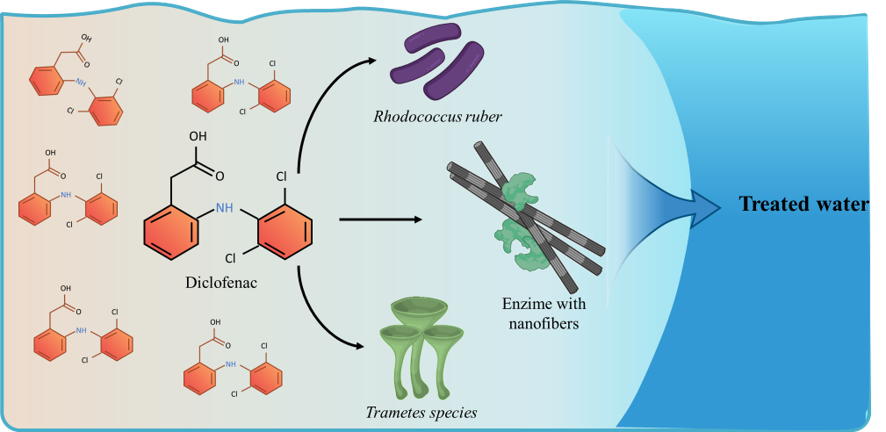
Due to its persistence and insufficient removal in traditional wastewater treatment facilities, diclofenac, one of the most commonly used non-steroidal anti-inflammatory drugs (NSAIDs) worldwide, has been regularly found in aquatic and terrestrial ecosystems. This makes it an emerging pollutant of concern. With an emphasis on the employment of microbes and immobilized systems, this review paper assesses biotechnological methods for removing diclofenac from the environment. The drug's physicochemical properties, its global distribution in surface water, groundwater, and soils, and its toxicity to non-target organisms such as fish, birds, invertebrates, and plants are all covered. Its effects range from oxidative stress and renal failure to genotoxicity and behavioral changes. Biodegradation mediated by bacteria (e.g., Rhodococcus ruber, Pseudomonas moorei) and fungi (e.g., Trametes spp.) shows potential for the compound's breakdown through mechanisms like hydroxylation and cleavage of aromatic rings, despite the efficiency and cost limitations of physicochemical methods. The use of immobilized biocatalysts, such as laccases in nanofibers, biochar or membranes, and microbial cells in biofilters, is particularly noteworthy since it increases the degraders' stability, reusability, and toxicity resistance. The creation of bioremediation systems based on immobilized preparations is found to be an environmentally safe, effective, and promising substitute for reducing diclofenac-induced environmental contamination.
Keywords: Diclofenac; Bioremediation; Microorganisms; Immobilized Systems; Environmental Toxicity; Laccase.
Downloads
Article Details

This work is licensed under a Creative Commons Attribution-NonCommercial-NoDerivatives 4.0 International License.

You are free to:
- Share — copy and redistribute the material in any medium or format
- The licensor cannot revoke these freedoms as long as you follow the license terms.
Under the following terms:
- Attribution — You must give appropriate credit , provide a link to the license, and indicate if changes were made . You may do so in any reasonable manner, but not in any way that suggests the licensor endorses you or your use.
- NonCommercial — You may not use the material for commercial purposes .
- NoDerivatives — If you remix, transform, or build upon the material, you may not distribute the modified material.
- No additional restrictions — You may not apply legal terms or technological measures that legally restrict others from doing anything the license permits.