Propiedades fisicoquímicas y nutricionales de las hamburguesas vegetales: el papel de los hidrocoloides y la proteína de guisante
Remigio Yamid
Universidad del Cauca
Joselin
Universidad del Cauca
Marino
Universidad del Cauca
Paola Andrea
Universidad del Cauca
Jose Luis
Universidad del Cauca
DOI: https://doi.org/10.17981/ingecuc.21.2.2025.04
Palabras clave: fuente de proteína vegetariana, reología, hidrocoloide, arveja, Lenteja común
Resumen
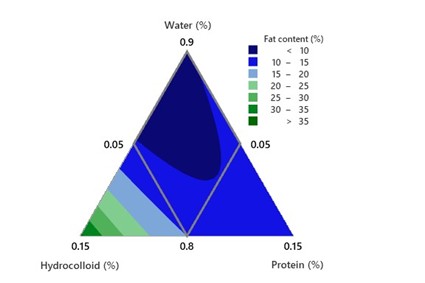
Uno de los principales desafíos en el desarrollo de análogos cárnicos de origen vegetal es reproducir las propiedades fisicoquímicas y texturales de los productos cárnicos procesados convencionales. Este reto ha cobrado relevancia debido al creciente interés global por fuentes alternativas de proteína. Entre ellas, las proteínas vegetales han logrado una amplia aceptación gracias a su disponibilidad, versatilidad funcional y aptitud para incorporarse en diversas matrices alimentarias, como las hamburguesas vegetales. El contenido y la retención de humedad son parámetros críticos de calidad en la formulación de hamburguesas vegetales, ya que influyen directamente en la percepción del consumidor sobre la frescura y la calidad global del producto. Un nivel elevado de humedad se asocia con propiedades texturales deseables, en particular una sensación en boca suave y jugosa, característica de las hamburguesas de carne tradicionales. No obstante, la adición de humedad debe evaluarse cuidadosamente, pues un desequilibrio con la estructura del producto puede afectar negativamente la percepción sensorial. La incorporación de ingredientes con capacidad de retención de agua es una de las estrategias más efectivas para reducir la pérdida de humedad durante el procesamiento de hamburguesas vegetales. Estos ingredientes —principalmente hidrocoloides y aislados proteicos de origen vegetal— presentan una alta afinidad tanto por el agua libre como por los componentes estructurales de la matriz alimentaria. Sin embargo, la proporción e interacción de estos agentes retenedores de agua deben evaluarse con precisión, ya que también pueden generar retos en la formulación o comprometer otras propiedades funcionales y nutricionales del producto final. Para analizar estos efectos, el presente estudio evaluó formulaciones compuestas por agua (85 % – 90 %), aislado de proteína de arveja (5 % – 10 %) y un hidrocoloide comercial (5 % – 10 %), utilizando un diseño de mezclas de vértices extremos. Los resultados muestran que la concentración de hidrocoloide influye significativamente en el contenido de agua de las hamburguesas vegetales fritas, alcanzando valores superiores al 60 %. Un mayor contenido de agua se asocia con una disminución de la fuerza de corte/compresión (de 300 N a aproximadamente 100 N), lo que se traduce en una textura más suave. Asimismo, el rendimiento de cocción mejora, superando el 100 %, mientras que la contracción del producto se reduce, con disminuciones de diámetro inferiores al 2 %. Sin embargo, este mayor contenido de humedad también se vincula con un aumento en la absorción de grasa durante la fritura, elevando los niveles de lípidos en más de un 15 %. Además, la incorporación de hidrocoloides reduce el contenido total de fitatos (<2 mg/g de muestra) como resultado tanto del efecto térmico como de la dilución por un ingrediente libre de fitatos (como el hidrocoloide), lo que podría mejorar la biodisponibilidad de minerales. Por otro lado, un mayor nivel de aislado de proteína de arveja incrementa la digestibilidad proteica in vitro (superior a 5 mg GE/g de muestra), tal como se anticipó en pruebas preliminares, contribuyendo así a un mejor perfil nutricional. No obstante, un incremento en la cantidad de proteína también eleva los valores de fuerza de corte/compresión (>300 N), lo que impacta negativamente la textura. Estos hallazgos ponen de relieve el doble efecto de los ingredientes con capacidad de retención de agua sobre las propiedades fisicoquímicas y nutricionales de las hamburguesas vegetales. Por lo tanto, el ajuste preciso de las concentraciones de hidrocoloide y aislado proteico resulta esencial para optimizar el equilibrio entre textura, retención de humedad, contenido de grasa y disponibilidad de nutrientes.
Descargas
Citas
FAO, Food Outlook: Biannual report on global food markets. Rome, 2023.
J. Jang and D. Lee, “Advancements in plant based meat analogs enhancing sensory and nutritional attributes,” npj Science of Food, vol. 8, no. 1, pp. 1–13, 2024, doi: 10.1038/s41538-024-00292-9.
H. Ritchie, P. Rosado, and M. Roser, “Meat and Dairy Production,” Meat Producton.
J. Jang and D. Lee, “Advancements in plant based meat analogs enhancing sensory and nutritional attributes,” npj Science of Food, vol. 8, no. 1, pp. 1–13, 2024, doi: 10.1038/s41538-024-00292-9.
A. Rairdin, D. Elango, C. Soregaon, J. Raigne, A. Singh, and L. Laan, “Plant-based protein crops and their improvement: Current status and future perspectives,” Crop science, vol. 65, pp. 1–24, 2025, doi: 10.1002/csc2.21389.
M. Benkovic, A. Tusek, T. Cvetnic, T. Jurina, D. Valinger, and J. Kljusuric, “An Overview of Ingre-dients Used for Plant-Based Meat Analogue Production and Their Influence on Structural and Tex-tural Properties of the Final Product,” Gels, vol. 9, no. 921, pp. 1–27, 2023, doi: https://doi.org/10.3390/gels9120921.
B. Mayara, R. Ferreira, I. Maria, M. Torres, A. Roberto, and G. Monteiro, “Mixtures development, physicochemical characterization, and consumer acceptance for high-protein vegan burgers based on pre-gelatinized grains flours without gluten,” Food science and technology, vol. 2061, no. 44, pp. 1–6, 2024, doi: https://doi.org/10.5327/fst.00306 Mixtures.
A. Rairdin, D. Elango, C. Soregaon, J. Raigne, A. Singh, and L. Laan, “Plant-based protein crops and their improvement: Current status and future perspectives,” Crop science, vol. 65, pp. 1–24, 2025, doi: 10.1002/csc2.21389.
S. Siddiqui et al., Valorization of plant proteins for meat analogues design—a comprehensive review, vol. 250, no. 10. Springer Berlin Heidelberg, 2024. doi: 10.1007/s00217-024-04565-1.
K. Kyriakopoulou, J. Keppler, and A. Van der Goot, “Functionality of Ingredients and Additives in Plant-Based Meat Analogues,” Foods, vol. 10, pp. 3–29, 2021.
J. Souppez, B. Dages, G. Pavar, J. Fabian, J. Thomas, and E. Theodosiou, “Mechanical properties and texture profile analysis of beef burgers and plant-based analogues,” Journal of Food Engineering, vol. 385, no. August 2024, p. 112259, 2025, doi: 10.1016/j.jfoodeng.2024.112259.
D. Tunnarut, A. Nopwinyuwong, and T. Tanakamolpradit, “Quality improvement of plant-based patty using methylcellulose, κ-carrageenan and xanthan gum,” Journal of Current Science and Tech-nology, vol. 12, no. 2, pp. 327–335, 2022, doi: 10.14456/jcst.2022.25.
P. Varela and S. M. Fiszman, “Hydrocolloids in fried foods. A review,” Food Hydrocolloids, vol. 25, no. 8, pp. 1801–1812, 2011, doi: 10.1016/j.foodhyd.2011.01.016.
MCS, “Datasheet transglutaminase,” 2020, Molecular Cuisine Supplies, Puebla, México.
L. Presenza, L. Fabrício, J. Galvão, and T. Vieira, “Simplex-centroid mixture design as a tool to evaluate the effect of added flours for optimizing the formulation of native Brazilian freshwater fish burger,” Lwt, vol. 156, 2022, doi: 10.1016/j.lwt.2021.113008.
AOAC 930.15, “Method 930.15: Moisture Determination,” 2005. doi: 10.7868/s0044450213010210.
AOAC 920.39, “Method 920.39: Crude Fat in Feeds, Cereal Grains and Forages,” 2005.
M. Martín et al., “Effects of the Addition of Pecan Nuts on the Nutritional Properties and Final Quality of Merino Lamb Burgers,” Applied Sciences, vol. 13, pp. 1–15, 2023.
Megazyme, “Protein Digestibility Assay Procedure,” 2019. doi: 10.1111/j.1753-4887.1955.tb03454.x.
A. J. Agostinho, W. de Souza Oliveira, D. S. Anunciação, and J. C. C. Santos, “Simple and Sensitive Spectrophotometric Method for Phytic Acid Determination in Grains,” Food Anal Methods, vol. 9, no. 7, pp. 2087–2096, Jul. 2016, doi: 10.1007/s12161-015-0387-0.
M. Latta and M. Eskin, “A simple and rapid colorimetric method for phytate determination,” J Agric Food Chem, vol. 28, no. 6, pp. 1313–1315, Nov. 1980, doi: 10.1021/jf60232a049.
M. Latta and M. Eskin, “A Simple and Rapid Colorimetric Method for Phytate Determination,” Journal of Agricultural and Food Chemistry, vol. 28, no. 6, pp. 1313–1315, 1980, doi: 10.1021/jf60232a049.
A. Agostinho, W. Souza, D. Anunciacao, and J. Caldas, “Simple and Sensitive Spectrophotometric Method for Phytic Acid Determination in Grains,” Food Analytical Methods, vol. 9, no. 7, pp. 2087–2096, 2016, doi: 10.1007/s12161-015-0387-0.
ISO, ISO 8589, Second edi., vol. 2007. 2007, p. 16.
G. Vu, H. Zhou, and D. McClements, “Impact of cooking method on properties of beef and plant-based burgers: Appearance, texture, thermal properties, and shrinkage,” Journal of Agriculture and Food Research, vol. 9, no. May, p. 100355, 2022, doi: 10.1016/j.jafr.2022.100355.
A. Zimoch, A. Krawczyk, Z. Krol, D. Kulig, L. Bobak, and A. Jarmoluk, “Influence of Microbial Transglutaminase on the Formation of Physico-Chemical Properties of Meat Analogs,” Foods, vol. 13, no. 24, pp. 1–13, 2024, doi: 10.3390/foods13244085.
A. Gazmuri and P. Bouchon, “Analysis of wheat gluten and starch matrices during deep-fat frying,” Food Chemistry, vol. 115, no. 3, pp. 999–1005, 2009, doi: 10.1016/j.foodchem.2009.01.020.
A. Bakhsh, S. J. Lee, E. Y. Lee, Y. H. Hwang, and S. T. Joo, “Characteristics of beef patties substituted by different levels of textured vegetable protein and taste traits assessed by electronic tongue sys-tem,” Foods, vol. 10, no. 11, 2021, doi: 10.3390/foods10112811.
B. Arora, S. Kamal, and V. Sharma, “Effect of Binding Agents on Quality Characteristics of Mush-room Based Sausage Analogue,” Journal of Food Processing and Preservation, vol. 41, no. 5, pp. 1–8, 2017, doi: 10.1111/jfpp.13134.
G. Vu, H. Zhou, and D. McClements, “Impact of cooking method on properties of beef and plant-based burgers: Appearance, texture, thermal properties, and shrinkage,” Journal of Agriculture and Food Research, vol. 9, no. May, p. 100355, 2022, doi: 10.1016/j.jafr.2022.100355.
S. Dinani, N. Broekema, R. Boom, and A. Van der Goot, “Investigation potential of hydrocolloids in meat analogue preparation,” Food Hydrocolloids, vol. 135, no. August 2022, p. 108199, 2023, doi: 10.1016/j.foodhyd.2022.108199.
S. Cornet, S. Snel, J. Lesschen, A. Van Der Goot, and R. Van der Sman, “Enhancing the water hold-ing capacity of model meat analogues through marinade composition,” Journal of Food Engineering, vol. 290, p. 110283, 2021, doi: 10.1016/j.jfoodeng.2020.110283.
R. Van Der Sman, E. Paudel, A. Voda, and S. Khalloufi, “Hydration properties of vegetable foods explained by Flory – Rehner theory,” Food Research International, vol. 54, pp. 804–811, 2013, doi: 10.1016/j.foodres.2013.08.032.
S. Dinani, N. Broekema, R. Boom, and A. Van der Goot, “Investigation potential of hydrocolloids in meat analogue preparation,” Food Hydrocolloids, vol. 135, no. August 2022, p. 108199, 2023, doi: 10.1016/j.foodhyd.2022.108199.
S. Taghian, Y. Zhang, B. Vardhanabhuti, and A. Van der Goot, “Enhancing textural properties in plant-based meat alternatives: The impact of hydrocolloids and salts on soy protein-based products,” Current Research in Food Science, vol. 7, pp. 1–12, 2023, doi: 10.1016/j.crfs.2023.100571.
M. Alam, K. Pant, D. Brar, B. Dar, and V. Nanda, “Exploring the versatility of diverse hydrocolloids to transform techno-functional, rheological, and nutritional attributes of food fillings,” Food Hy-drocolloids, vol. 146, pp. 1–14, 2024, doi: 10.1016/j.foodhyd.2023.109275.
F. Salehi, “Effect of coatings made by new hydrocolloids on the oil uptake during deep-fat frying: A review,” Journal of Food Processing and Preservation, vol. 44, no. 11, pp. 1–12, 2020, doi: 10.1111/jfpp.14879.
Y. Gao, R. Liu, and H. Liang, “Food Hydrocolloids: Structure, Properties, and Applications,” Foods, vol. 13, no. 1077, pp. 1–8, 2024.
I. Peñaranda and M. Garrido, “Viability of fructooligosaccharides as substitutes for methylcellulose reduction in plant-based burgers,” Food Hydrocolloids, vol. 154, pp. 1–10, 2024, doi: 10.1016/j.foodhyd.2024.110104.
R. Afshari et al., “Investigation of the effects of inulin and β-glucan on the physical and sensory properties of low-fat beef burgers containing vegetable oils: Optimisation of the formulation using D-optimal mixture design,” Food Technology and Biotechnology, vol. 53, no. 4, pp. 436–445, 2015, doi: 10.17113/ftb.53.04.15.3980.
D. Tunnarut, A. Nopwinyuwong, and T. Tanakamolpradit, “Quality improvement of plant-based patty using methylcellulose, κ-carrageenan and xanthan gum,” Journal of Current Science and Tech-nology, vol. 12, no. 2, pp. 327–335, 2022, doi: 10.14456/jcst.2022.25.
J. Han, D. Keum, S. Hong, Y. Kim, and S. Han, “Comparative Evaluation of Polysaccharide Binders on the Quality Characteristics of Plant-Based Patties,” Foods, vol. 12, no. 20, pp. 1–16, 2023, doi: 10.3390/foods12203731.
I. Peñaranda and M. Garrido, “Viability of fructooligosaccharides as substitutes for methylcellulose reduction in plant-based burgers,” Food Hydrocolloids, vol. 154, pp. 1–10, 2024, doi: 10.1016/j.foodhyd.2024.110104.
L. Cui, J. Chen, J. Zhai, L. Peng, and Y. Xiong, “Hydrocolloids-aided control of oil penetration and distribution in deep-fried breaded fish nuggets,” Food Hydrocolloids, vol. 145, no. June, p. 109028, 2023, doi: 10.1016/j.foodhyd.2023.109028.
M. H. R. Bhuiyan and M. Ngadi, “Application of batter coating for modulating oil, texture and structure of fried foods: A review,” Food Chemistry, vol. 453, no. January, p. 139655, 2024, doi: 10.1016/j.foodchem.2024.139655.
F. Yilmaz, G. Bayrakal, and E. Akkaya, “Evaluation of textural and sensorial properties of burger patties produced with plant-based protein alternatives,” Food and Health, vol. 10, no. 4, pp. 273–285, 2024.
C. Botella, M. Viuda, J. Fernández, J. Pérez, and J. Fernández, “Development of plant-based burgers using gelled emulsions as fat source and beetroot juice as colorant: Effects on chemical, physico-chemical, appearance and sensory characteristics,” LWT - Food Science and Technology, vol. 172, pp. 1–11, 2022, doi: 10.1016/j.lwt.2022.114193.
A. Gazmuri and P. Bouchon, “Analysis of wheat gluten and starch matrices during deep-fat frying,” Food Chemistry, vol. 115, no. 3, pp. 999–1005, 2009, doi: 10.1016/j.foodchem.2009.01.020.
D. Xie, D. Guo, Z. Guo, X. Hu, S. Luo, and C. Liu, “Reduction of oil uptake of fried food by coatings: A review,” International Journal of Food Science and Technology, vol. 57, no. 6, pp. 3268–3277, 2022, doi: 10.1111/ijfs.15266.
A. Bakhsh, S. Lee, E. Lee, N. Sabikun, Y. Hwang, and S. Joo, “A novel approach for tuning the phys-icochemical, textural, and sensory characteristics of plant-based meat analogs with different levels of methylcellulose concentration,” Foods, vol. 10, no. 3, pp. 2. – 15, 2021, doi: 10.3390/foods10030560.
B. Sakhale, J. Badgujar, V. Pawar, and S. Sananse, “Effect of hydrocolloids incorporation in casing of samosa on reduction of oil uptake,” Journal of Food Science and Technology, vol. 48, no. 6, pp. 769–772, 2011, doi: 10.1007/s13197-011-0333-0.
A. Ye, “Gastric colloidal behaviour of milk protein as a tool for manipulating nutrient digestion in dairy products and protein emulsions,” Food Hydrocolloids, vol. 115, pp. 2–15, 2021, doi: 10.1016/j.foodhyd.2021.106599.
Q. Du, M. Tu, J. Liu, Y. Ding, X. Zeng, and D. Pan, “Plant-based meat analogs and fat substitutes , structuring technology and protein digestion: A review,” Food Research International, vol. 170, no. January, pp. 1–12, 2023, doi: 10.1016/j.foodres.2023.112959.
Z. Cheng et al., “Addition of κ-carrageenan increases the strength and chewiness of gelatin-based composite gel,” Food Hydrocolloids, vol. 128, 2022, doi: doi.org/10.1016/j.foodhyd.2022.107565.
Q. Du, M. Tu, J. Liu, Y. Ding, X. Zeng, and D. Pan, “Plant-based meat analogs and fat substitutes , structuring technology and protein digestion: A review,” Food Research International, vol. 170, no. January, pp. 1–12, 2023, doi: 10.1016/j.foodres.2023.112959.
F. Zhi, L. Zhao, Y. Chia, C. Zhen, and J. Du, “Texture improvement and in vitro digestion modula-tion of plant-based fish cake analogue by incorporating hydrocolloid blends,” Current Research in Food Science, vol. 8, pp. 1–11, 2024, doi: 10.1016/j.crfs.2024.100775.
N. Singh, “Pulses: an overview,” Journal of Food Science and Technology, vol. 54, no. 4, pp. 853–857, 2017, doi: 10.1007/s13197-017-2537-4.
M. F. Dewan, S. N. U. Shams, and M. A. Haque, “Impact of Processing on the Bioactive Compounds and Antinutritional Factors of Lentil (Lens culinaris L.)—A Review,” Legume Science, vol. 6, no. 3, 2024, doi: 10.1002/leg3.253.
J. Pospiech, J. Kruger, and J. Frank, “Plant-based burger patties are a source of bioaccessible iron and zinc,” NFS Journal, vol. 38, pp. 1–7, 2025, doi: 10.1016/j.nfs.2025.100219.
A. Ishaq, S. Irfan, A. Sameen, and N. Khalid, “Plant-based meat analogs: A review with reference to formulation and gastrointestinal fate,” Current Research in Food Science, vol. 5, pp. 973–983, 2022, doi: 10.1016/j.crfs.2022.06.001.
F. Nasrollahzadeh et al., “Food Hydrocolloids Hemp (Cannabis sativa L .) protein concentrates from wet and dry industrial fractionation : Molecular properties , nutritional composition , and aniso-tropic structuring,” Food Hydrocolloids, vol. 131, pp. 1–14, 2022, doi: 10.1016/j.foodhyd.2022.107755.
M. F. Dewan, S. N. U. Shams, and M. A. Haque, “Impact of Processing on the Bioactive Compounds and Antinutritional Factors of Lentil (Lens culinaris L.)—A Review,” Legume Science, vol. 6, no. 3, 2024, doi: 10.1002/leg3.253.
J. Pospiech, J. Kruger, and J. Frank, “Plant-based burger patties are a source of bioaccessible iron and zinc,” NFS Journal, vol. 38, pp. 1–7, 2025, doi: 10.1016/j.nfs.2025.100219.


English
Español (España)