
Evaluación del perfil de egreso en educación según graduados y empleadores en una universidad peruana
Barra lateral del artículo
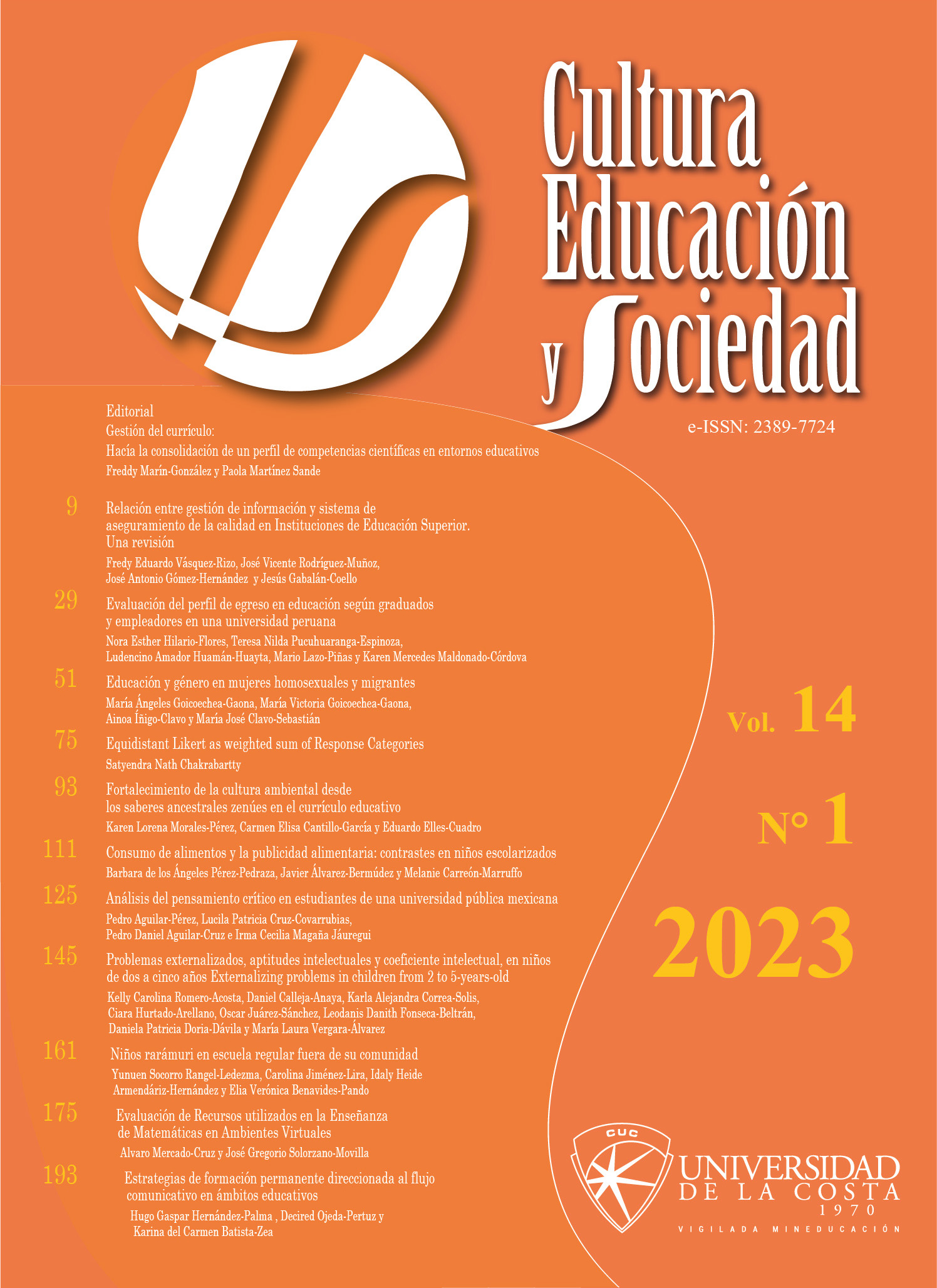
Contenido principal del artículo
Resumen
Introducción: La universidad tiene la alta responsabilidad de formar profesionales de calidad coherente con las exigencias sociales y laborales, cuyas competencias se desarrollan durante el itinerario formativo, pero se evidencian en el ejercicio profesional en el campo laboral; procesos que son necesarios evaluar para tomar decisiones de mejora. Objetivo: Evaluar la percepción del logro de las competencias genéricas y específicas según egresados y empleadores, de la carrera profesional de educación de la Universidad Nacional del Centro del Perú (UNCP). Metodología: Es un estudio de enfoque cuantitativo, con diseño descriptivo transversal, acerca de las variables: inserción laboral, logro de competencias genéricas, específicas y de especialidad de perfil de egreso y estudios posteriores del egresado. Se aplicó un cuestionario de 25 reactivos a 92 egresados (α de Cronbach = 0.925), y un cuestionario de 7 reactivos a 24 empleadores (α de Cronbach = 0.901), seleccionados de manera intencional, no probabilística. Los datos fueron organizados, analizados con medidas de tendencia central, análisis porcentual y graficados con MS Excel. Resultados y discusión: Se determinó una pronta inserción laboral de os egresados, 87% en menos de un año; en su mayoría muestran un nivel de logro muy bueno y sobresaliente de las competencias genéricas y específicas en el desempeño de los egresados en su centro de labor, concordante en la percepción de los egresados y empleadores. Conclusiones: Las competencias genéricas de comunicación oral y escrita, pensamiento crítico, trabajo en equipo son valoradas como sobresalientes, en tanto que en las competencias específicas sobresalen la competencia pedagógica, de especialidad y axiológica.
Descargas
Detalles del artículo

Esta obra está bajo una licencia internacional Creative Commons Atribución-NoComercial-SinDerivadas 4.0.

Creative Commons 2020 CULTURA EDUCACIÓN Y SOCIEDAD
Esta obra está bajo licencia internacional Creative Commons Reconocimiento-NoComercial-SinObrasDerivadas 4.0.
Los artículos publicados son de exclusiva responsabilidad de sus autores y no reflejan necesariamente las opiniones del comité editorial.
La Revista CULTURA EDUCACIÓN Y SOCIEDAD respeta los derechos morales de sus autores, los cuales ceden al comité editorial los derechos patrimoniales del material publicado. A su vez, los autores informan que el presente trabajo es inédito y no ha sido publicado anteriormente.
Todos los artículos están bajo una Licencia Creative Commons Atribución-NoComercial-SinDerivadas 4.0 Internacional.