
Phytochemical potential of berries: An overview
Article Sidebar
Main Article Content
Abstract
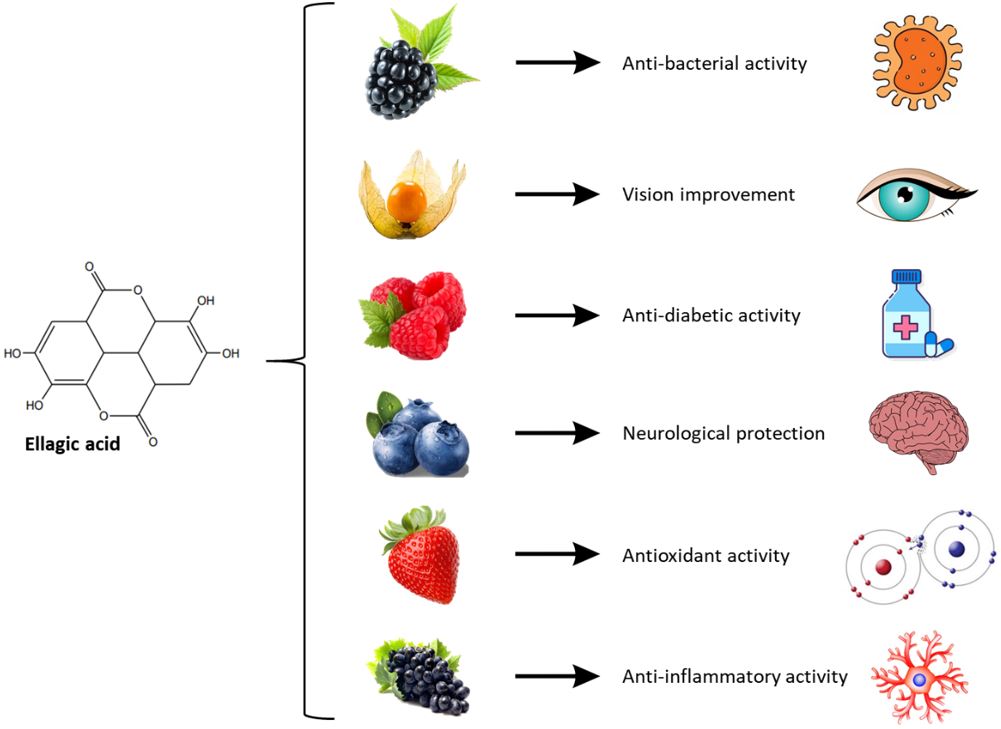
Introduction: Phytochemicals, or secondary metabolites, present in small fruits are responsible for improving the health of consumers when included in the daily diet. All edible forms of berries are considered safe functional foods because they have nutritional properties and therapeutic potential. Objective: Therefore, this narrative review aims to analyze the state of the art on the phytochemical potential of the six main small fruits (blackberry, physalis, raspberry, blueberry, strawberry and grape), to gather information on the application of strategies to obtain berries with higher concentrations of biomolecules and to present the benefits of phytochemicals to the consuming public. Methodology: In the first stage of this narrative review, the cultivation scenario of these six main berries is contextualized. Subsequently, a temporal metasynthesis on berry phytochemicals is performed. In the last part of this review, we detail the biomolecule profile of blackberry, physalis, raspberry, blueberry, strawberry and grape and focus on their action against diseases. Results: The consumption of these six berries triggers anti-diabetic, anti-inflammatory, anti-cancer, anti-aging, anti-obesity, anti-microbial, anti-ulcer and radioprotective, neuroprotective and glucoregulatory actions. Despite scientific and clinical evidence on the positive effects of small fruit consumption on human health, their consumption remains low. Conclusions: The creation of public policies will contribute to improve the scenario of berry intake because it will involve the entire small fruit production chain: scientists, producers, food and pharmaceutical industries, and consumers.
Downloads
Article Details

This work is licensed under a Creative Commons Attribution-NonCommercial-NoDerivatives 4.0 International License.

You are free to:
- Share — copy and redistribute the material in any medium or format
- The licensor cannot revoke these freedoms as long as you follow the license terms.
Under the following terms:
- Attribution — You must give appropriate credit , provide a link to the license, and indicate if changes were made . You may do so in any reasonable manner, but not in any way that suggests the licensor endorses you or your use.
- NonCommercial — You may not use the material for commercial purposes .
- NoDerivatives — If you remix, transform, or build upon the material, you may not distribute the modified material.
- No additional restrictions — You may not apply legal terms or technological measures that legally restrict others from doing anything the license permits.