
Urban Acupuncture as a Strategy for Sustainable Development in the Isla de León Sector, Cartagena de Indias
Article Sidebar
Main Article Content
Abstract
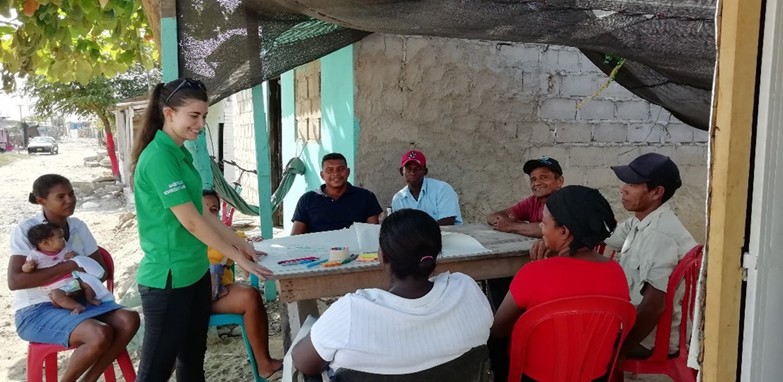
Urban Acupuncture, conceived by architect Jaime Lerner, is based on the idea that cities operate like living organisms, and that it is possible to alleviate structural issues through strategic and localized interventions, similar to acupuncture therapy applied to critical points. This study aims to identify the key criteria for applying this approach in the Isla de León sector, located in the southeastern extreme of Cartagena, near the Ciénaga de la Virgen, where there is a high incidence of extreme poverty. Territories with these characteristics have previously been addressed using community development methodologies, such as those proposed by Burgos Hernández, Montalvo López, and Ramírez Juidiaz (2022), who emphasize the value of participatory processes to reduce both social and spatial inequalities. In this research, a characterization of the sector is carried out using community participation tools, complemented by a comparative case methodology that allows for the analysis of previous experiences in the implementation of Urban Acupuncture.
Downloads
Article Details

This work is licensed under a Creative Commons Attribution-NonCommercial-NoDerivatives 4.0 International License.
CC Reconocimiento-NoComercial-SinObrasDerivadas 4.0