
Español Archaeoacoustic Survey of the Huánuco Pampa Archaeological Site, a Settlement on the Ancient Inca Route of Qhapaq Ñan
Article Sidebar
Main Article Content
Abstract
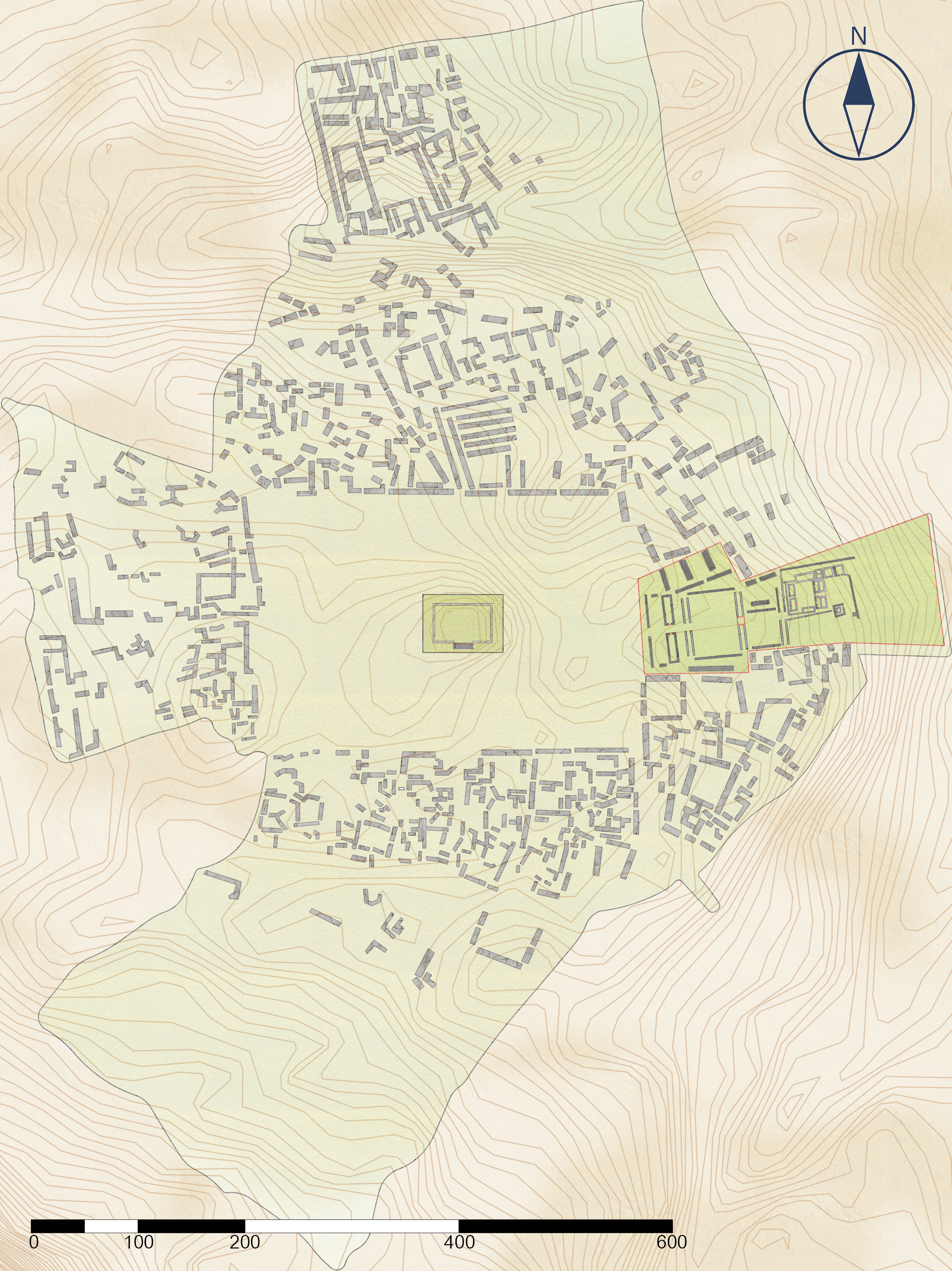
The study analyzes the acoustic impact in six areas of the Inca complex of Huánuco Pampa, located on the Qhapaq Ñan axis, with the aim of evaluating its sound behavior and possible communicative function. A quantitative descriptive-experimental investigation was carried out using structured observation forms and in situ measurements with a digital decibel meter, recording acoustic levels at 1 m, 10 m, and 20 m from a standardized sound source at 90 dB. The results show variations between 46.1 dB and 89.7 dB, associated with spatial morphology, stone materiality, and state of conservation. The Ushnu showed greater stability and sound propagation, suggesting architectural intentionality linked to ceremonial functions. It is concluded that the spatial configuration of the complex favors controlled reverberation dynamics, providing empirical evidence to the field of Andean archaeoacoustics and proposing a replicable methodological model for acoustic studies in heritage contexts.
Downloads
Article Details

This work is licensed under a Creative Commons Attribution-NonCommercial-NoDerivatives 4.0 International License.
CC Reconocimiento-NoComercial-SinObrasDerivadas 4.0