
From ancestral knowledge to contemporary desing: vernacular architecture in the Emberá Katío community of Urrao, Antioquia
Article Sidebar
Main Article Content
Abstract
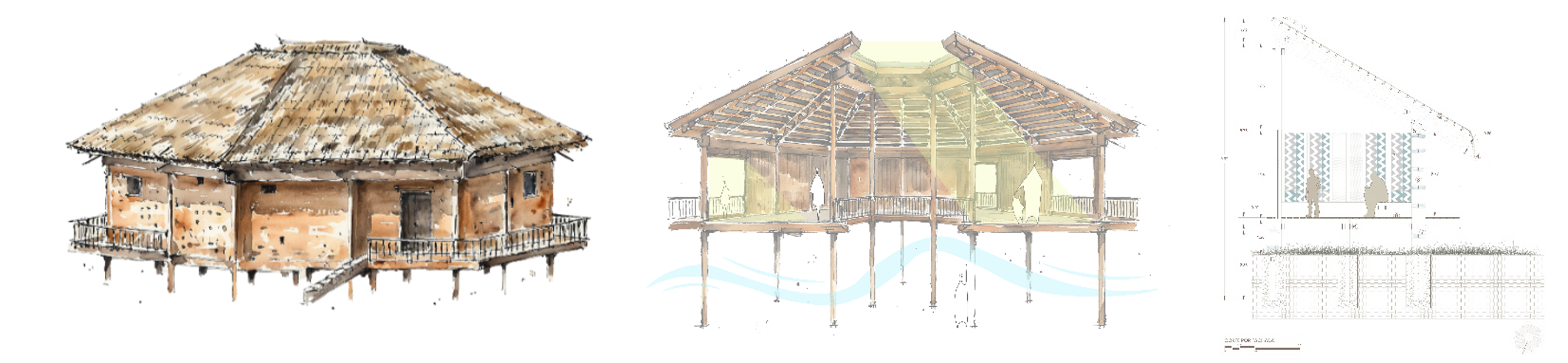
This article analyzes the self-construction practices of the Emberá Katío Eyabida people in Urrao, Antioquia, from an integrated understanding of the physical–cultural landscape and its relationship with sustainability. Using a qualitative approach grounded in architectural ethnography, participatory workshops differentiated by age groups, interviews, and direct observation were conducted. The findings show that community spatial representations—drawings, sketches, and diagrams—function as landscape constructs that articulate dwelling, activity, and territory, revealing complementary emphases between children and adults. In addition, ancestral knowledge associated with self-construction and the use of local materials is identified as a current strategy for ecological adaptation and social cohesion. As a result, a flexible, replicable, and self-buildable collective space prototype is proposed, integrating ancestral knowledge with passive bioclimatic strategies. The study contributes a transferable methodological framework for the analysis of dwelling and participatory design processes in rural and Indigenous contexts.
Downloads
Article Details

This work is licensed under a Creative Commons Attribution-NonCommercial-NoDerivatives 4.0 International License.
CC Reconocimiento-NoComercial-SinObrasDerivadas 4.0